Stranded between borders: Europe’s broken system for reuniting refugee families
Across Europe, unaccompanied minors who fled war and persecution wait to reunite with relatives a border or two away. What should take months can stretch into years. Solomon’s investigation traces the maze of bureaucracy and policy decisions keeping families apart.
Mahdi grew up in Mazar-I-Sharif, an Afghan city famous for its blue-domed mosque – worlds away from his modern apartment block in Berlin. On days when his longing for his old life feels overwhelming, he follows the same routine. He takes a bus across the city to his aunt’s house, finding sanctuary in her kitchen. Among food that tastes like home, Mahdi misses his family just a little less.
Mahdi’s family are Hazara, a predominantly Shia minority historically persecuted by the Taliban. The fall of the regime in 2001, however, allowed Hazara families to improve their position and Mahdi remembers a comfortable childhood replete with possibility. The eldest son of a maths teacher and a high-ranking member of the Afghan army, the house was filled with books, and there was a computer to game on. But as the Taliban took back control, everything changed. Reports of targeted attacks against Hazaras resumed.
Then, in August 2021, the Taliban took over Mazar-I-Sharif.
A slight 18-year-old with neatly-combed hair, Mahdi shares few details about those shattering “dark days.”
One night, he says, the Taliban came to the house and took his father away. “It destroyed me.”
Mahdi’s father was gone. But, he says, the Taliban kept coming back, searching the house for weapons. (Reports from human rights groups have found the Taliban targeted the families and children of former Afghan National Army officers). Mahdi’s mother and grandfather fled to the mountains with his siblings, but decided his safest option was to leave for Europe. Mahdi’s aunt and uncle were living in Germany with their five children, but he wasn’t planning to join them.
He was so scared, he didn’t have a clear plan at all, except to leave Afghanistan.
From escape to shipwreck
Crossing Iran and Turkey, Mahdi met three other teenage boys and together they talked about their future, their dreams, where they’d go to school. In February 2023, the four boys boarded a crowded boat called Summer Love in Izmir, Turkey, bound for southern Italy.
When Mahdi woke in hospital, he was severely injured. But it was the emotional pain he found unbearable. His three friends hadn’t made it out of the water. According to official documentation provided by Mahdi’s social workers, he was asked to identify their bodies.
Traumatised and alone in Italy, where he didn’t speak the language (he communicated with medics via Google Translate) Mahdi, then 16, called his aunt, his father’s sister, who had watched him grow up. She’d been evacuated to Berlin after the Taliban takeover because her husband worked with the German army. Mahdi’s aunt invited him to live with them. Though she and her husband were raising five young children in temporary housing provided by the government, welcoming her nephew was never in question.
The challenges in Mahdi’s journey were far from over. Berlin was just a short flight away. But the bureaucracy of the EU’s family reunification policy meant it took eight months to be reunited with his family.
The long wait
Mahdi was one of approximately 43,000 unaccompanied children who arrived in Europe in 2023, according to the European Union Agency for Asylum. While some, like Mahdi, travel alone, others become separated during the journey, where the risks of kidnapping, torture, imprisonment and slavery have been well documented. So, too – as Mahdi’s story shows – has the lethal potential of crossing the Mediterranean and English Channel by boat.
Theoretically, unaccompanied asylum-seeking children arriving in Europe can be safely and swiftly reunited with family members already in the EU. These transfers are often facilitated by the Dublin III Regulation. Under Dublin III, the country where the child is located submits a reunification request to the member state where their relative lives. Once that state accepts the transfer (based on factors like proof of family ties, and the best interests of the child), reunification should happen within six months.
Drawing on interviews across Greece, Italy, and the UK with lawyers, NGO staff, legally appointed guardians and affected families — alongside dozens of internal EU documents obtained through Freedom of Information requests — Solomon uncovered multiple failings in Europe’s framework for reuniting families — a system that too often prolongs separation. “It’s torture for us and the kids too,” says Lora Pappa, president of METAdrasi, a Greek NGO that works on family reunification cases for unaccompanied minors in Greece.
Many of the factors impeding reunification are bureaucratic. Legal guardians are inconsistently appointed. Asylum interviews can omit critical information about eligibility for reunification. DNA testing requirements and definitions of family across countries do not align. In some cases, immigration offices aren’t familiar with reunification procedures. Even, as in Mahdi’s case, government contracts with travel agents expire so booking reunification flights becomes impossible. Three child protection specialists in Greece described cases where such lapses left children in limbo — even after their reunification requests had been approved.
The result is that children are stranded in shelters and foster care for months – sometimes years. In one case, the Palermo-based lawyer Alice Argento says she represented an eight-year-old boy who became separated from his family in 2022, while trying to board a boat in Tunisia. While a woman who witnessed the separation paid for the boy to cross the Mediterranean, so he could reach his family, he remained in a shelter for a year once he was in Europe.
“It’s heartbreaking for the parents and traumatizing for the children,” says Argento, who has worked on dozens of family reunification cases.
The bureaucracy of reunification
After the shipwreck, Mahdi’s social workers interviewed his aunt and uncle as part of his Best Interest Assessment – a form used under Dublin III. These interviews investigate the family relationship, and whether relatives can take care of the child. As part of this process, a social worker and psychologist interviewed Mahdi four times, assessing he suffered severe PTSD from the shipwreck, and that his best interest was to join his aunt and uncle in Germany.
Over the following weeks, as his reunification application was ongoing, Mahdi couldn’t do anything but sleep. Placed with a local family, he was then transferred to a shelter with fifteen other unaccompanied minors, mostly from Egypt. Initially, the shelter was a blur. Mahdi couldn’t stop thinking about the friends he had lost. “I was thinking, every time, that I am alive – and they died,” he says. “Why am I here?”
But, slowly, the others in the house drew him in. They were joyous and loud, and determined Mahdi should join them. They started cooking together and, when Mahdi gradually felt better, they played soccer and went to the beach.
While Mahdi’s housing was suitable, delays to family reunification often stem from problems with accommodation. In Italy, unaccompanied children under the age of 14 are housed in shelters with both Italian and migrant children – which means they are often appointed social workers untrained in asylum law. “Sometimes they don’t have the cultural mediators, they don’t understand the emergency and they don’t know the process,” says Elisa Bruno, a Catania-based lawyer who has worked on several reunification procedures.
Similar challenges have emerged in Greece. Between 30 and 40 percent of unaccompanied children arriving in Greece over the last decade are entitled to reunification with relatives in other EU countries, according to internal data obtained from the NGO METAdrasi. But before they can take the first steps, each child must be assigned a legal guardian – a requirement where the system repeatedly falters.
Under a new guardianship framework, prosecutors must now formally assign each case before a guardian can act. The change, meant to standardize protection, has instead produced serious bottlenecks. Internal EU Asylum Agency (EUAA) and European Commission documents from November 2024, obtained via freedom of information requests, show that appointments often dragged on for weeks, sometimes months. On Chios, the process could take two months. On Leros, the EUAA called it “extremely slow”. Similar delays on Kos and other islands, the agency warned, “cause delays in the processing of asylum cases” for unaccompanied children. Commission staff based on the islands raised the same concerns in their reports to Brussels.
“The new guardianship system has made reunifications harder,” said Anne Pertsch, a lawyer with Equal Rights Beyond Borders, an NGO that represents asylum-seekers in Greece seeking to reunite with family members in Germany and other EU countries.
Even once a guardian is appointed, other obstacles remain. Guardians say the Ministry’s child protection department often hands them Dublin cases too late, leaving little time to act before the strict two-month deadline for family reunification requests expires.
“My shortest was seven days,” said a former guardian who requested anonymity. Lawyers add that under the new framework, they can no longer represent a child independently. Until a guardian is appointed and gives consent, even urgent steps are put on hold.
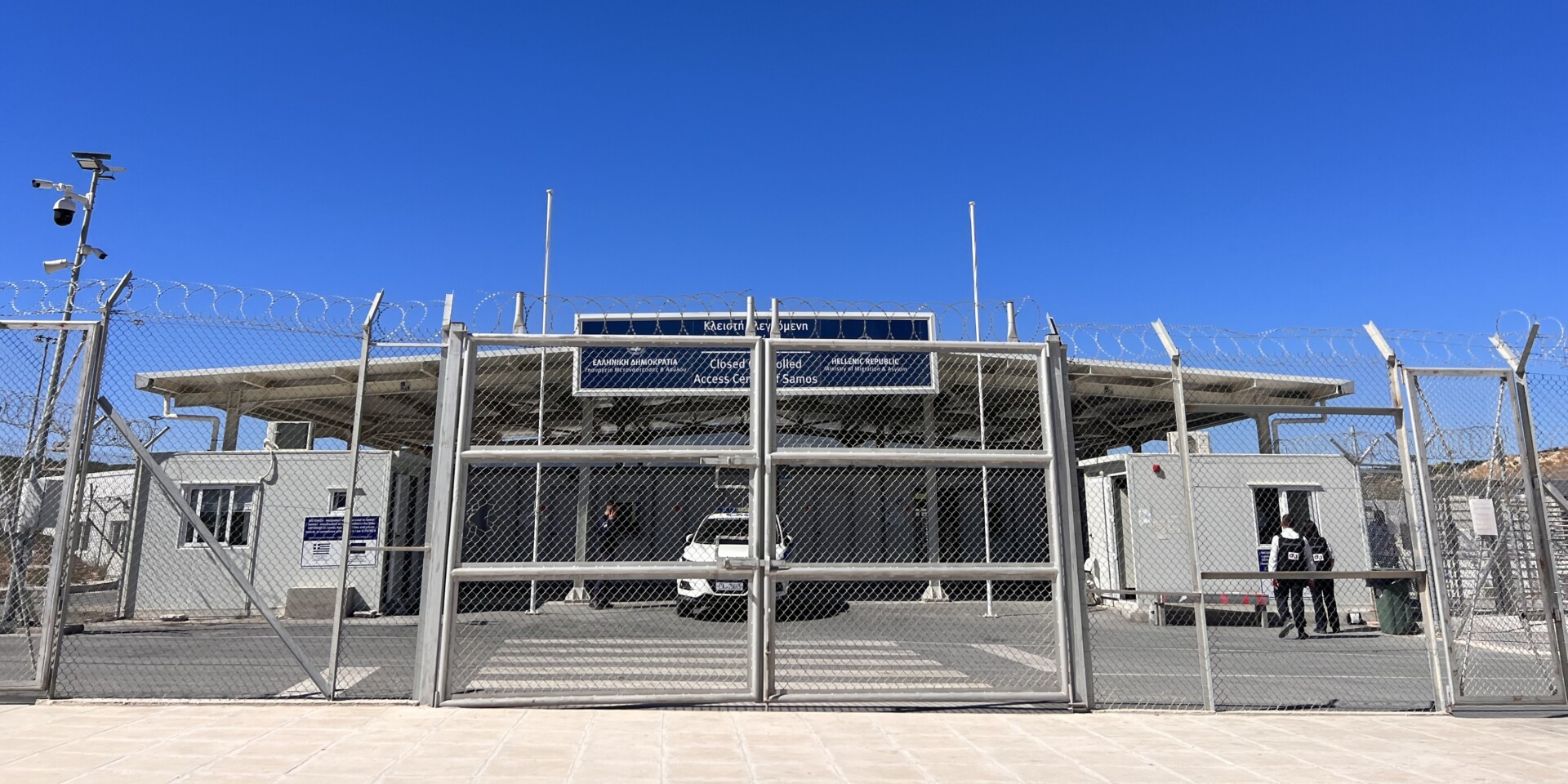
Caseloads have also spiraled far beyond the legal limit of 15 children per guardian. During a surge on Samos in late 2024, six guardians were responsible for more than 500 minors. On Kos, for part of the year, a single guardian covered the entire island, according to internal EU documents.
Resources are equally strained. Guardians are not required to have a legal background and in theory can rely on their organization’s legal departments. In practice, that support is often missing, leaving them to improvise. One former guardian described resorting to Google searches, manuals — whatever they could find — to meet strict reunification deadlines. This former guardian managed to complete four family reunification cases – but only by bypassing formal channels. For example, the guardian asked a child’s relative to translate documents in two days when a partner organization estimated 30. “I had to find alternative ways, otherwise the child would have missed their chance.”
Some minors never complete the reunification process at all. And some disappear from the system entirely. An October 2024 internal update from the European Commission reported “incidents of irregular departures of unaccompanied children” from several islands, including Lesbos. Panagiotis Nikas, president of the NGO Zeuxis, sees it firsthand: “Sometimes, kids leave one day and they don’t come back.”
Nikas says children often make the choice after hearing from peers about long delays or failed cases, fearing they will “age out” or be stuck indefinitely. Others simply want to take matters into their own hands. Some even notify social workers and lawyers once they reach another country. Similar patterns have been observed in Italy, where children navigating trauma, displacement, and separation from their families, slip out of the system, exposing them to trafficking, exploitation, or worse.
A success story?
Giovanna Sinopoli, one of Mahdi’s social workers, remembers his reunification application as a rare success – taking about eight months, the approval process was relatively smooth and quick compared to other cases she had worked on. A potential problem arose when the juvenile court issued a request for an age assessment, which would probably have added months of delays. But because Mahdi had a photo of his birth certificate (something many minors don’t have), his case workers could confirm his declared age was accurate.
However, although his team were satisfied, Mahdi found the process unbearable. A series of bureaucratic hurdles kept delaying his reunification with his aunt and uncle. “To us, Mahdi’s story is a success. But for him, having to wait for so long was devastating,” Sinopoli says.
In Italy, the logistical aspects of family reunification — such as booking and paying for plane travel — are handled by local police. However, when officers went to book Mahdi’s plane ticket to Berlin, they realized their travel agency agreement had expired. This meant Mahdi had to wait until a new tender was issued. “It was one of those Italian stupid bureaucratic situations,” says Sinopoli. In fact, the social workers at Mahdi’s asylum center even offered to pay for his trip – the ticket to Berlin cost less than 200 euros. But the reunification procedure required that the Police Department booked Mahdi’s flight, not anyone else. When the tender was approved, Mahdi was packed and waiting–only to be stranded again.
Travel plans for family reunifications follow a strict set of rules. Countries might require unaccompanied minors to arrive within fixed hours, and layovers are only possible within the countries of departure and destination, with border officers often escorting passengers during the airport transits. In Mahdi’s case, Germany required him to arrive by a specific time. But from Lamezia Terme, Mahdi’s nearest airport, there were no direct flights. The travel agency scrambled to build an itinerary that complied with the requirements.
Mahdi’s limbo was excruciating. His shelter was in the countryside, close to a series of waterfalls and he would often look for comfort there, pouring out his emotions, allowing himself to cry where nobody could hear him. “The sound of the water was very high,” he says. “You could be yourself out there.”
Mahdi’s case shows how fragile the reunification process can be. Even after all approvals are secured, a missing contract or administrative gap can derail months of preparation. Elsewhere, different obstacles emerge. Once family links are established, the lack of harmonization between EU countries gives destination states broad discretion to impose additional — and, advocates argue, often excessive — requirements.
These can include costly DNA tests, which, in private labs, can reach €3,000. These tests are often requested by the receiving country but not covered by it – leaving families or NGOs to shoulder the cost. “Some countries deliberately delay reunifications to reduce asylum influx, citing minor document issues as reasons for rejection,” said Lora Pappa, president of METAdrasi. “It’s like a back-and-forth game, that creates a tremendous stress for the children and significantly burdens the first entry countries, in the southern frontiers of the EU.” Pappa stressed no overarching regulation governs the member states’ decisions on family reunification requests — a gap she warned will remain under the New Pact on Migration and Asylum, set to take effect in 2026. METAdrasi has documented cases where applications were rejected with insufficient reasoning, or received no response at all. “The reception countries often don’t want the kids. They see successful reunifications as a pull factor,” added Panagiotis Nikas, director of Zeuxis. “In order to avoid their legal obligation, they put up as many barriers as possible.”
In some countries, political pressures mean family reunification rules are tightening. In March 2025, Austria was the first country to temporarily suspend family reunification. In September, the UK followed suit, suspending applications until tougher rules are introduced in the Spring.
Britain’s closed door
Even before this suspension, Britain took a stricter approach to family reunification than its EU counterparts. Separated children already in the UK aren’t allowed to apply for family members, like their parents, to join them – except if granted special circumstances. And, following Brexit, while parents who had been granted refugee status could apply to bring their children to the UK, close family members (such as siblings, grandparents and aunts and uncles) couldn’t.
“Most of our family reunion cases at Safe Passage International are child refugees seeking to reunite with wider family members in the UK such as aunts, uncles or siblings – rather than parents,” says the charity, Safe Passage. “In 2023 and 2024, almost half of all the unaccompanied children Safe Passage International supported in France attempting to reunite with family in the UK, were trying to reunite with a sibling – often their only remaining family member.”
Safe Passage believes the combination of bureaucratic hurdles and lack of safe routes for family reunification push children into the hands of smugglers and encourage them to make unsafe journeys. “Over the past two years, almost 60% of Safe Passage International’s new cases of unaccompanied children in France being supported to reunite with family in the UK have gone missing, having lost faith in the legal process,” the charity says. “To the best of our knowledge, they have made a dangerous journey to reach loved ones, instead of pursuing their claim under slow and restrictive UK rules.This relates to 10 out of all 17 new Safe Passage cases concerning France-UK applications across 2023 and 2024. In comparison, between 2016 and 2023, of the many children Safe Passage International supported to reunite under Dublin III, only one risked a dangerous journey.”
Following the suspension of family reunion rules, Safe Passage is concerned that children will be pushed even further into making unsafe routes to reach family members. “We’re talking about children from conflict and high human rights abuse areas, such as Afghanistan, Sudan and Iran, who have been torn apart from family in the chaos,” Gunes Kalkan, head of campaigns at the charity, said in a statement. According to statistics released by Safe Passage, over 5,000 children crossed the Channel in the year ending June 2025, and more than half of them made the journey alone.
In 2019, Amnesty International, in tandem with other charities, released a report titled “Without My Family”, which explored the impact family separation has on the lives of refugee children. The report flagged that many of the children interviewed lived in care. “Concerns were also raised about the children who fall through gaps in care and can become vulnerable to those who wish to exploit them through criminal gangs or sexual exploitation,” it read. Indeed, between 2021 and 2024, some 440 unaccompanied children (some as young as 12 years old) went missing from the hotels used to house asylum seekers.
Family, at last
When Mahdi was finally ready to leave, his friends and the social workers at the asylum center threw him a party. They all went to a local pizzeria and, with nearly forty people, including the center’s social and case workers, and the minors who lived there, they took over the restaurant. Mahdi read out loud a moving letter, thanking everyone who had supported him during those difficult months. They hugged and cried — tears of sadness and joy. In Berlin, his aunt, uncle and cousins were waiting for him, they welcomed him with flowers and open arms. After everything he had been through, Mahdi had finally found the sense of safety that comes from family.
Nearly three years ago, he arrived in Italy with a dream: he wanted to become a doctor. Today, his plans haven’t changed. He’s back in school working towards his high school diploma. He moved out of his aunt’s apartment and now shares a small subsidized apartment with other teenagers in similar situations. He still worries about what’s to come. His mother, grandfather and siblings are still in Afghanistan, hiding in the mountains, and talking to them by phone is often difficult. He’s also still waiting for his permanent refugee status. “If they say no, it will be hell for me,” he says. In the meantime, he tries to take it day by day, studying German and finding joy in the family he has close to him.
He spends the weekend at his aunt’s, where his uncle buys him ice-cream and chips and they watch movies together.
Once again he’s in a new country, where he has to learn the language and the culture but this time getting used to the new environment was different. “It was not difficult,” he says. “Because I had my auntie.”
This investigation was developed with the support of Journalismfund Europe. Reporting for this story was also supported by a grant from the Investigative Journalism for Europe (IJ4EU) fund.