100 Days: The refugees forced to push back other migrants at Europe’s border
They came to Greece seeking asylum. Instead, they say they were coerced by border guards into taking part in violent push backs of other migrants along the Greek-Turkish border. Solomon and Republik joined a months-long investigation by FAIA and WAV documenting what two refugees describe as 100 days of “forced labor on illegal missions.”
**Content warning: This text contains references to violence, including sexual violence.
The Afghan national was picked up just half an hour after crossing the Evros River from Turkey into Greece. The man from Iran managed a week before he too was bundled into a vehicle in the port city of Thessaloniki.
They had arrived in Greece separately in the autumn of 2022, but had the same goal: to reach the European Union and seek protection from the persecution they say they face in their respective homelands.
Rounded up and returned to the border where they crossed, both men feared they would be forced back, like countless others before them. Then someone asked if they spoke English. They did.
“If you work for us, we’ll give you papers,” the Afghan national quoted one of the officers in charge as telling him and a group of other refugees and migrants. “It will only take three months. Then we’ll give you papers that will allow you to go anywhere to seek asylum.”
The second man, from Iran, described a similar pitch: “And then the man said: if you stay here and work with us for three months, we’ll give you a document that allows you to leave the country.”
Seeing “no other choice”, they agreed.
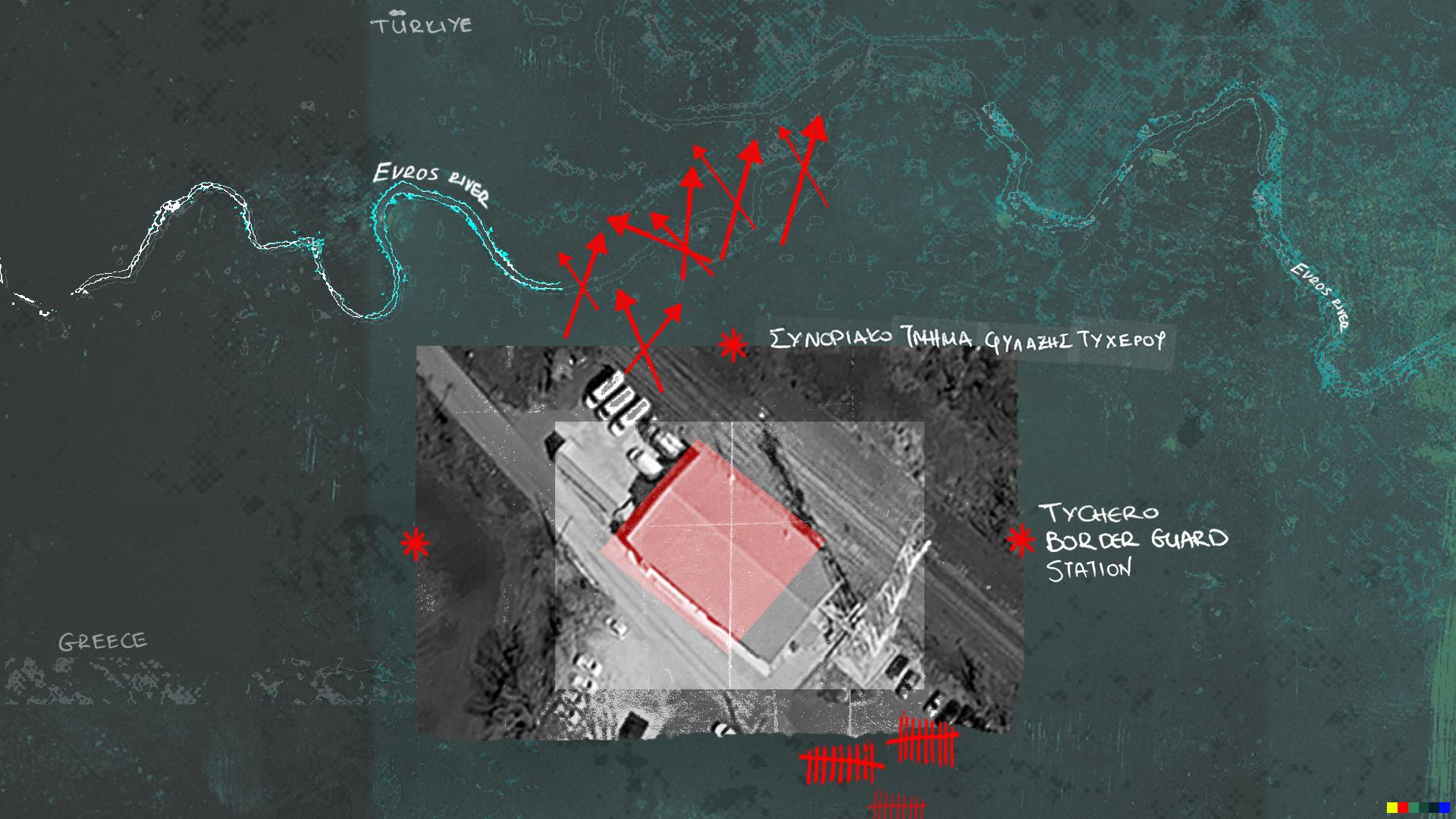
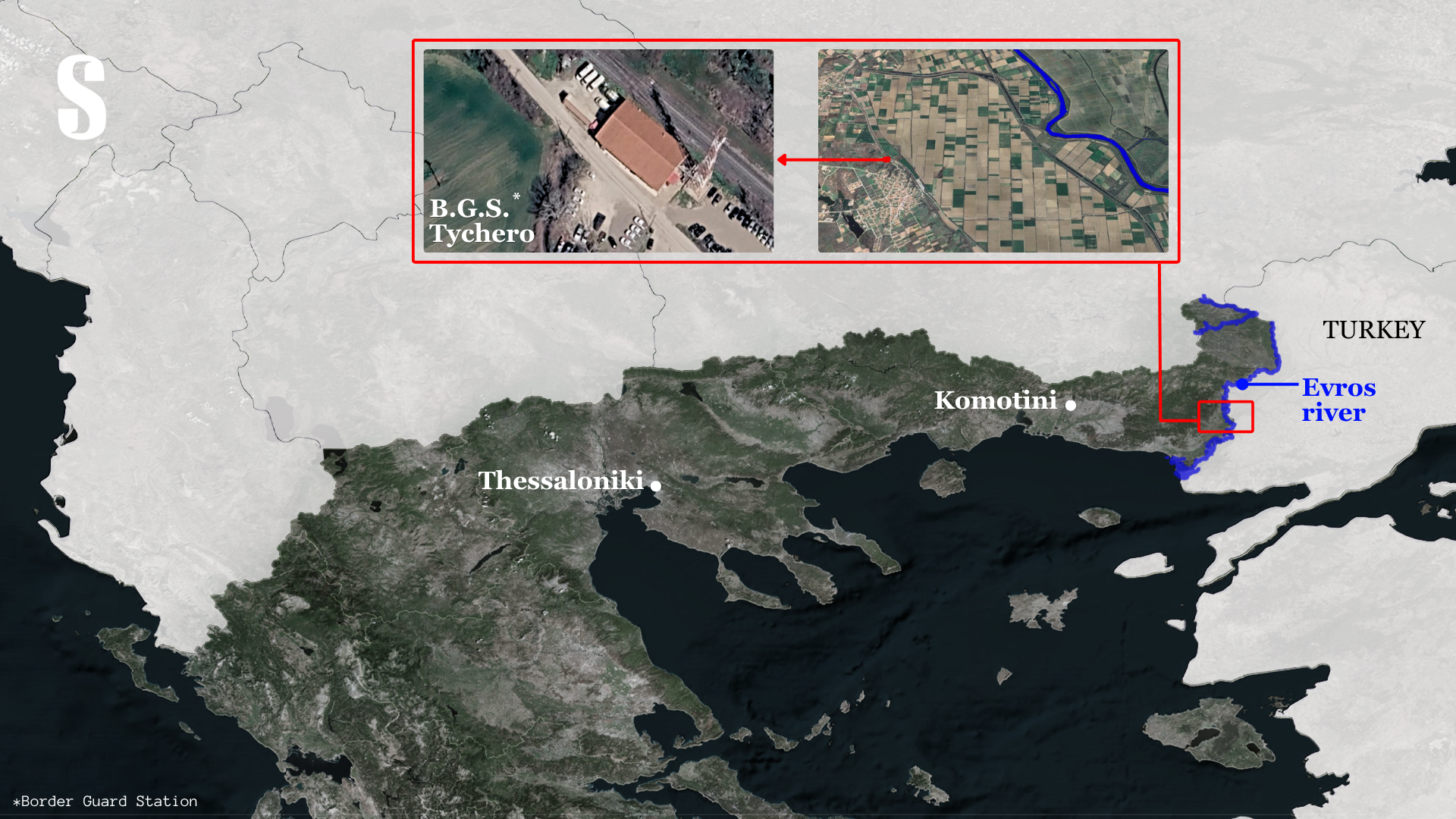
What followed was 100 days of confinement at the Tychero Border Guard Station in Evros – the heavily militarized border region between Greece and Turkey –and nightly operations to force other refugees and migrants back across the river. They witnessed violence and human rights abuses.
“I never thought that one day I too would be forcibly returning these migrants, whatever their situation, to Turkey,” said the Afghan man.
Their accounts, in which the men alleged they were victims of “forced labor on illegal missions”, were recorded by the Greek research organisation Forensic Architecture Initiative Athens, FAIA, and the Swiss research organisation WAV.
Using their testimony, as well as open-source information, satellite imagery, and on-site research, FAIA constructed a 3D model of the Tychero Border Guard Station.
As part of a joint cross-border reporting effort, Solomon worked with FAIA and WAV to verify the information gathered during the investigation, which is also being published by BIRN and the Swiss magazine Republik.
The full investigation by Forensic Architecture Initiative Athens (FAIA) titled 100 Days: The Forced Labourers of Evros, video duration: 1 hour.
Pushbacks ‘systematic’
So-called ‘pushbacks’, by which refugees and migrants are forced back over borders before they can even request protection, are considered illegal under international and European law, yet there is a wealth of evidence that the practice is widely used by Greek border forces.
In January 2025, the European Court of Human Rights delivered a landmark ruling citing “strong indications” of “a systematic practice of ‘pushbacks’” by Greece.
The phenomenon of turning some migrants and refugees against others, of recruiting them to participate in pushbacks, is less well known.
It was first documented in June 2022, in an international investigation coordinated by Lighthouse Reports. Last month, a BBC investigation revealed new evidence, including testimonies and audiovisual material.
The Afghan and Iranian nationals spoke from Switzerland, on condition of anonymity.
Greece disputes such accounts, claiming it adheres to international law in its treatment of migrants and refugees.
The Greek police and authorities in charge of the Tychero Border Guard Station did not respond to requests for comment.
‘Speak English?’
The Iranian national was picked up by police in Thessaloniki and told he was being taken to a refugee camp. For roughly three hours, he was driven with a group of others in the back of a truck, in which he said he struggled to breathe.
When he got out, he saw not a camp, but the river he had crossed only a week earlier. The border guards were armed and aggressive, he said, and were ferrying people by boat back to Turkish territory.
When it was his turn, a guard asked whether any of them spoke English. The asylum seeker from Iran said he spoke several languages, including English. He was pulled aside and told the offer.
The asylum seeker from Afghanistan also spoke of a man, his face covered, appearing at the window of the cell in which he and a number of others were being held having just crossed the river. The man asked if any of them spoke English. The Afghan national said he did. He had worked as an interpreter. He was driven back to the border.
That’s where both men spent the next 100 days, at roughly the same time.
Their mobile phones confiscated, they were held in locked cells during the day, up to six people to a cell sleeping on metal beds. When the sun went down, the border guards would come knocking.
“They’d come around seven and say: ‘guys, guys, job, job’,” said the Iranian national.
“We’d take the boats from the outdoor area, check them, and let out a little air so we could easily transport them in the van.”
They placed the boats in the van, loaded up ropes and climbed in too.
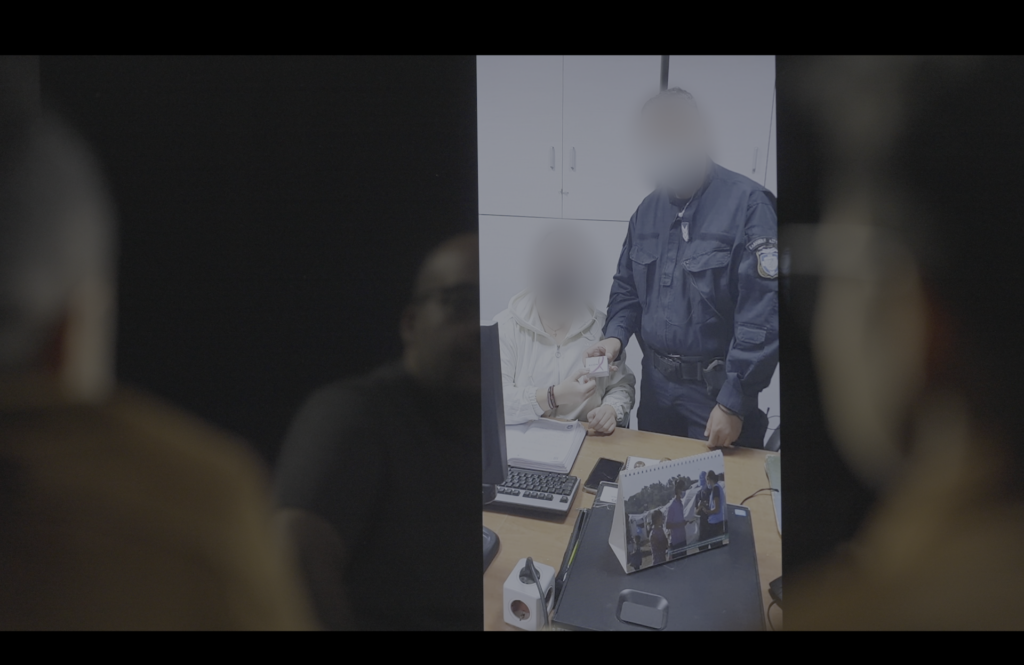
Snapshots from the investigation 100 Days: The Forced Labourers of Evros by Forensic Architecture Initiative Athens, 2026.
Both men said they ‘pushed back’ at least 30 people a day over the Evros, rising to between 240 and 300 on what the guards called “Thessaloniki Day”, when it seemed the migrants and refugees were rounded up in the city and transported to the border.
Both reported witnessing violence and abuse.
Boy beaten
The Afghan national said he could not forget one particular incident when a boy, not more than 16 or 17 years old, was told to get out of the truck they were travelling in. The boy had been banging on the door of the truck because he couldn’t breathe. A border guard told him not to worry and to get out.
“He was a little boy. A child,” he said. “And the officer started hitting him with the handle of a [boat] paddle. And while the officer was hitting him, he kept saying: ‘If you can’t breathe, don’t come here,’ over and over again.”
Both men reported hearing border guards beating a man behind a closed door at the border guard station in Tychero.
“Apparently, he was on the ground and they were just beating him. And at first, the man was screaming, but after a few minutes, we couldn’t hear anything,” said the man from Afghanistan.
The border guards told them they suspected the man was a smuggler, because they had already sent him back once and he had returned.
In another incident, involving a pregnant migrant woman who was in visible discomfort, the Iranian national quoted a border guard as telling her: “Do you need a doctor? Turkey has very good doctors; you’ll go there and see very good doctors.”
Both men said the border guards confiscated cash and phones from the refugees and migrants they pushed back over the river, which corroborates earlier reporting by Solomon and the Spanish newspaper El País that between 2017 and 2022, border guards at the river seized more than 2.2 million euros during pushbacks.
‘Ghosts’
The asylum seekers described themselves as “ghosts” at the border guard station, their presence unregistered.
They never ventured into the village and the only time they left the station was when the guards learned about an inspection visit, told them to throw away everything they had in their cell, and to spend a few days in the forest.
When they returned, they found that the writing they had scribbled on the walls had been painted over.
Around the same time, according to a report by the Greek Ombudsman published by the Office of the UN High Commissioner for Human Rights, Tychero was visited by a delegation from the Council of Europe’s Committee for the Prevention of Torture. The delegation did not find any third-country nationals at the site.
“However, recent dates written by detainees on the walls indicate that the detention centre is operative and used regularly, whenever illegal aliens are identified and arrested,” the report states.
“The length of stay of each detainee is an issue that needs further investigation.”
A separate source, who declined to be named, confirmed to Solomon that the Council of Europe inspection occurred at the same time as the two asylum seekers said they were told to hide in the forest.
The report said the station lacks based detention standards, “even in the case of short-term detention”.
The Afghan national said the room they stayed in was disgusting.
“It took a long time to clean it, but we couldn’t even get it 80 per cent clean,” he said. “No matter what we did, it stayed dirty, because they didn’t even give us anything that could make it a little cleaner.”
‘Removers’
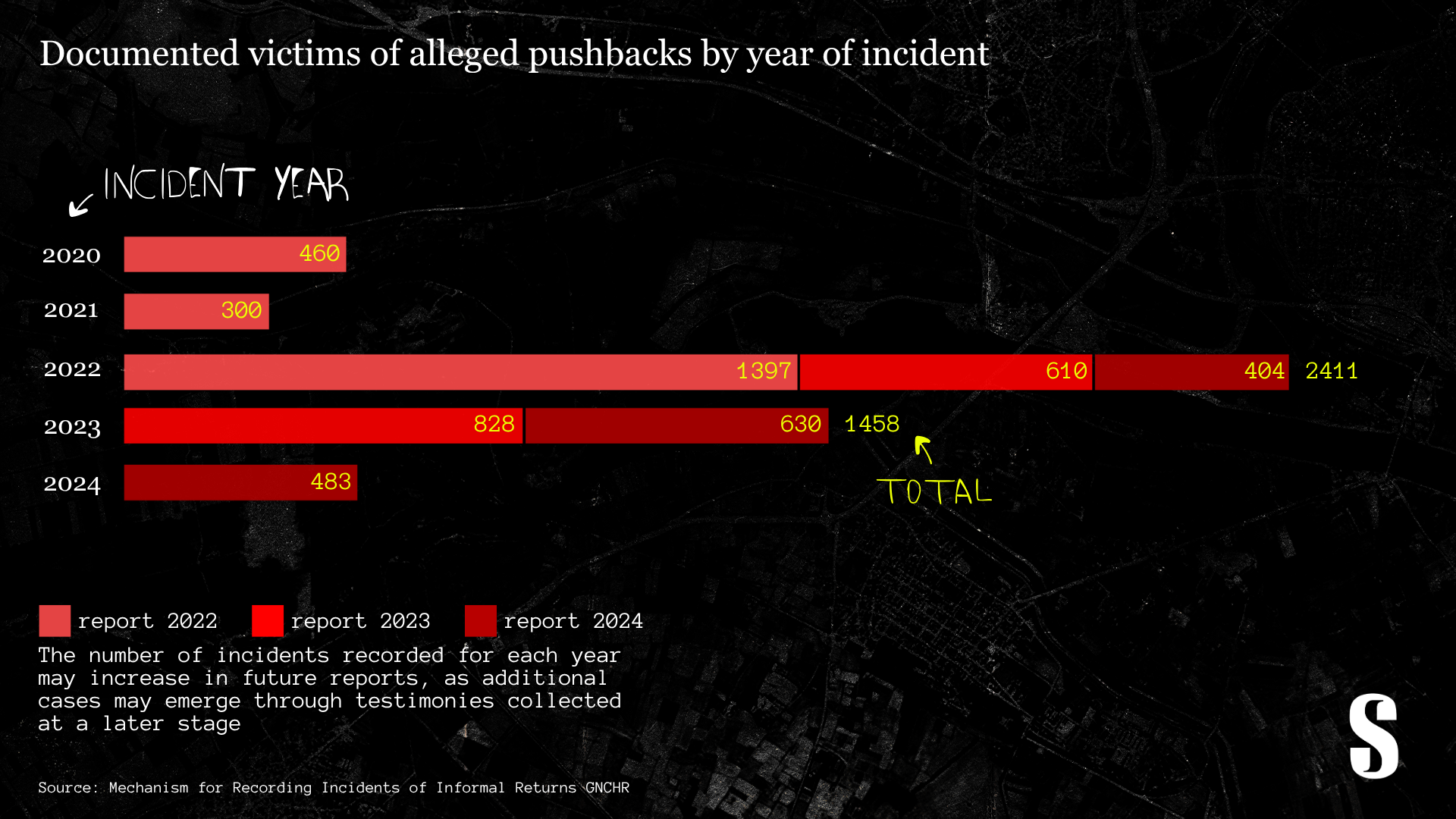
In three annual reports since 2022, Greece’s Mechanism for Recording Incidents of Informal Returns, which operates under the supervision of the National Human Rights Commission, NCHR, has documented migrants and refugees taking part in pushbacks, describing them as ‘removers’.
“Either uniformed officers transport and hand over the alleged victims to the removers, who are third-country nationals, or the process takes place in the presence of uniformed officers,” said Ilias Tsambardoukas, the Mechanism’s coordinator.
“In some cases, the victims realised they were compatriots because the removers themselves tried to advise them, e.g., ‘don’t shout.’ So, there was a cultural affinity.”
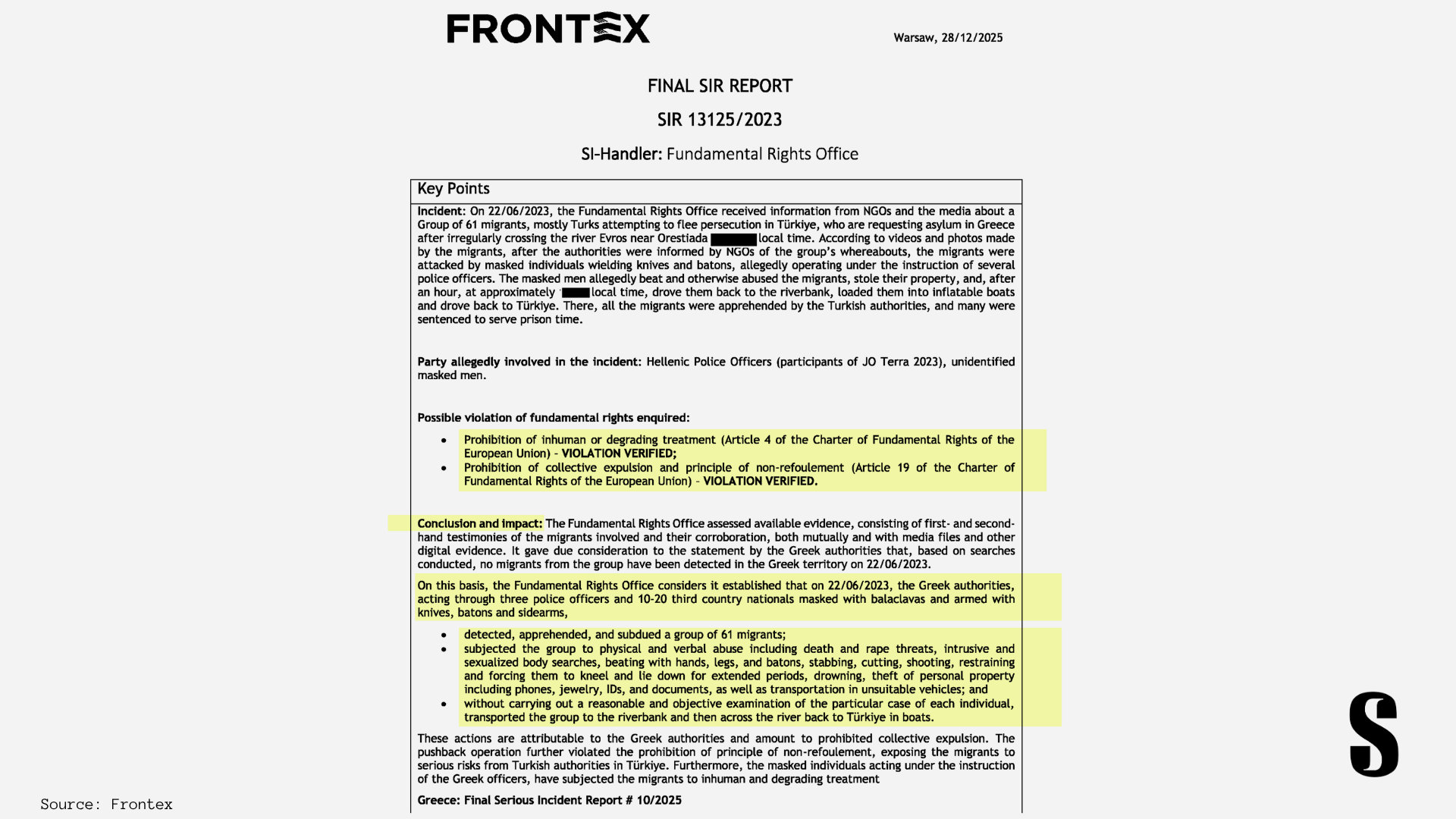
In 2023, an internal report from the EU’s own border agency, Frontex, known as a Serious Incident Report, referred to the involvement of “foreign paramilitaries”, “masked third country nationals” or “Afghan masked men”, in connection with an incident in June of that year.
It reported that masked men carrying knives accompanied three Greek police officers in confronting dozens of mainly Turkish nationals trying to cross the border. The masked men beat them, robbed and pushed them back onto Turkish territory.
Such practices are also referenced in a lawsuit filed in Greek courts and the European Court of Human Rights by a Syrian national born in 1995, who entered Greece after spending several years in Turkey and is currently in Germany.
According to the lawsuit, the Syrian crossed from Turkey into Greece with his brother in July 2022. When his brother collapsed, they sought help and were taken to a police station. There, the Syrian said their belongings were confiscated and they were placed in a van. His brother died in the van, which drove them to the border.
“There was also a group that the Syrians refer to among themselves as ‘mercenaries,’ since they are civilians who speak Arabic and had their faces covered, and this group operated under the orders of the Greek authorities and carried out the procedures for the return”, the lawsuit states.
Marianna Tzeferakou, a lawyer at Refugee Support Aegean and who is representing the Syrian family, said Greek prosecutors dismissed the initial Greek lawsuit as “unfounded”, despite evidence including emergency call logs and GPS data. According to her, instead of saving a life, the call to emergency services triggered a brutal pushback operation.
Even the guards themselves have spoken about using migrants and refugees to turn back others
In May 2023, five guards serving in Evros were arrested and charged with facilitating the entry of third-country nationals into Greece. One of them, in his defence, told authorities that he had in fact been key to developing the practice of selecting asylum seekers to help carry out pushbacks.
They first used Pakistanis, he said, in testimony obtained by Solomon. Then Syrians. The police dismissed the guard’s claims.
This phenomenon is also reflected in testimony recorded in October 2023 by an international organisation and which was obtained by Solomon. In it, a Pakistani man says he was apprehended by Greek border guards in spring 2023 and offered the chance to “work with them” for three months in Tychero rather than be returned to Turkey.
Like the two interviewed for this story, the Pakistani reported that six people were held at the border guard station at any one time; he said that whenever there was word of an imminent inspection at the station, those held there were sent into the forest. They were forced to scavenge for food among the items confiscated from migrants and refugees being pushed back.
‘I want people to know’
Shown photos, the two asylum seekers were able to identify some of the guards they encountered at Tychero by name.
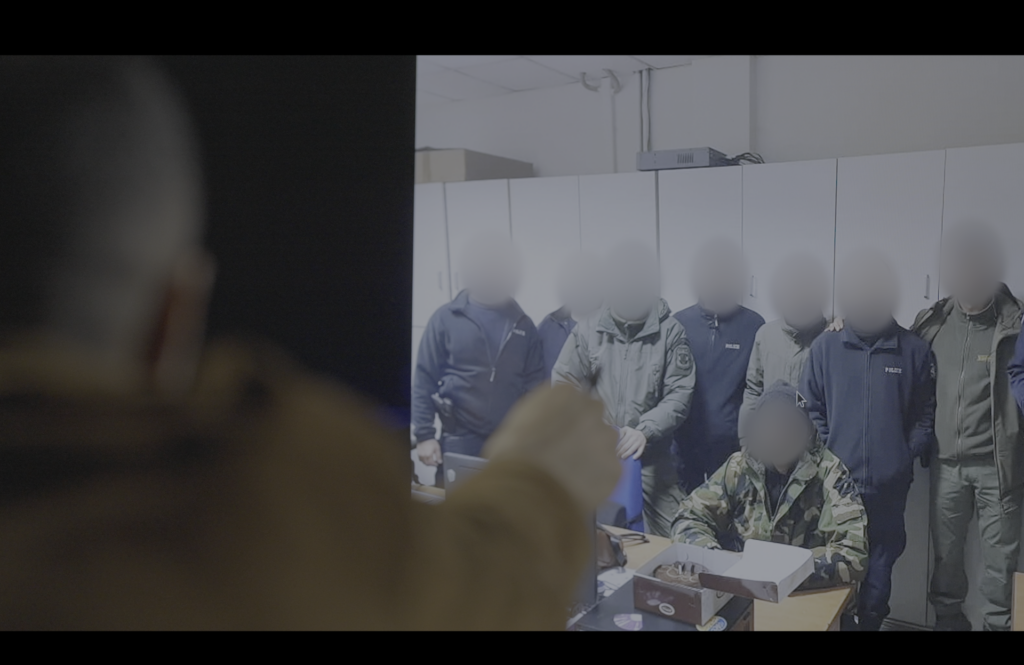
Snapshots from the investigation 100 Days: The Forced Labourers of Evros by Forensic Architecture Initiative Athens, 2026.
“I know this person, the one in the middle wearing blue. He was also violent. He was a violent person,” said the Iranian national. FAIA and WAV did not independently confirm the identities of the officers.
Once, said the man from Afghanistan, a guard brought two women asylum seekers into the room, also Iranian and Afghan.
“He brought these two girls into the middle of the room. He said: ‘You have to choose one of these ladies, and you can even have sex with her’,” the man from Afghanistan recalled, and described being “completely shocked by this situation”.
After 100 days, the two asylum seekers said they were fingerprinted and given 10 minutes to gather their belongings. Their mobile phones were returned.
“They took me to a bus stop in the city, in Tychero,” said the Afghan national. “And they told me I could buy a ticket.” He travelled to Thessaloniki and, within two days, both men had left Greece. They now live in Switzerland.
“I want people to know,” the Iranian national said of their experience. “They were beating people. They tortured people. They humiliated people. They sexually abused people. They robbed people. They took everything from them: their belongings, their passports, their money, their dignity. They stripped people naked.”
“That’s what I saw,” he said. “And I want the world to hear it. What I saw there will always live within me.”
This article was produced within the framework of MOST – Media Organisations for Stronger Transnational Journalism, a Journalism Partnership funded by the Creative Europe programme that supports independent media specialising in international reporting.